The MiSTer FPGA project. It’s the best way to play retro video games and you’re not using it. You should be.
Retro gamers…are you sick of latency? Glitchy video? Popping sounds?
Do you want your games to run and feel just as they did on their original consoles?
Would you be interested if I told you that you can use the original console controllers, without the expense of an original console, or the inconvenience of connecting one to a modern television?
Then keep reading, because I’m going to introduce you to something that apparently many of you are unaware of. You shouldn’t be using emulation. You should be using replication.
That’s right. I said replication.
In this blog entry I will relate to you my experiences with gaming, take you through a synopsis of what replication is, how it’s superior to emulation (and, in a few ways, not so superior), and why you should be using it.
My Story
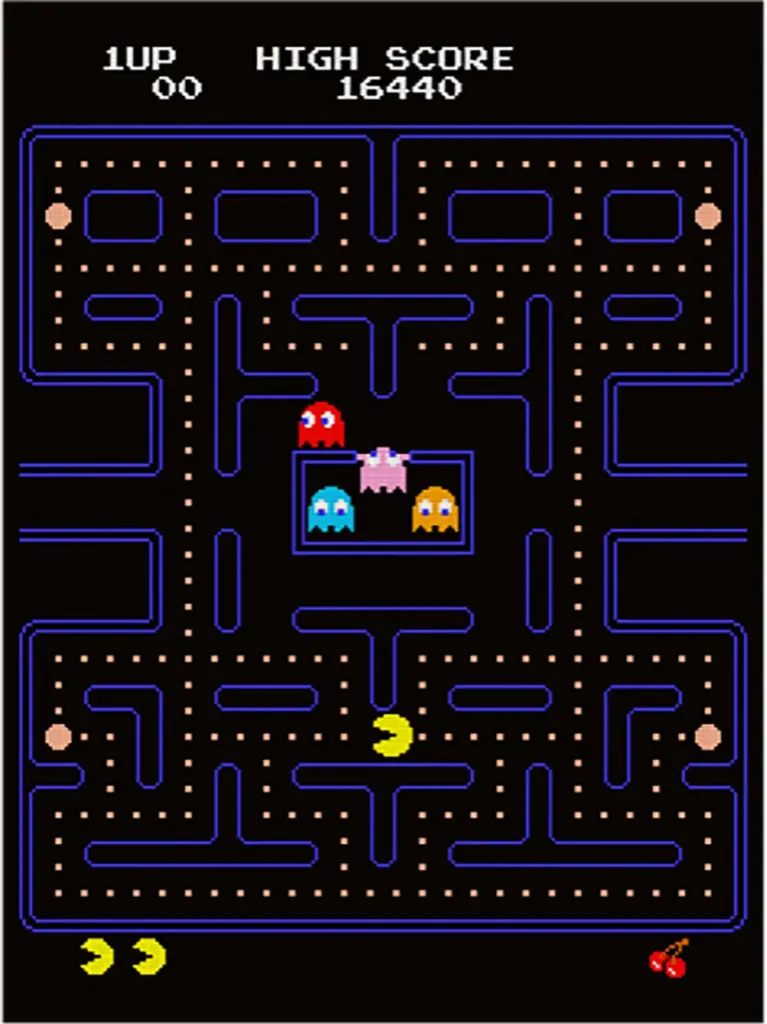
I was born in 1974, which was the right time to come into the world to be primed for a lifelong love of gaming. The video gaming industry was growing and maturing just as I was. I played my first arcade game when I was six. It was Pac-Man. I was hooked on gaming instantly. A large percentage of whatever money I could get as a child went into the coin slots of various arcade games.
When emulators started coming into their own in the late 90’s and early 21st century, of course I made use of this emerging technology. I loved having the ability to relive playing my childhood favorites, right from the comfort of my own computer…or modded Xbox…or Raspberry Pi connected to my television.
I used emulation for roughly 20 years because that was the retro gaming standard, and there was no other way at the time (aside from setting up an arcade in your home, financially far out of my reach). It was fun, of course. But something always felt…a little off, to me. It was always a little bit glitchy, a little bit laggy, just something never felt exactly right about it.
When the pandemic hit, like all of you I was locked in my house with too much time on my hands. As is common with me, I filled some of that time researching my retro gaming passion. While doing so, I stumbled upon the MiSTer project, which is built upon replication rather than emulation. (For simplicity’s sake, I will use the terms “replication” and “MiSTer” interchangeably for the rest of this blog entry.) I was curious, I was intrigued, I was even excited. I had to try this MiSTer thing. This was the sweet spot of the pandemic between the time we were all locked up and the time that others started artificially inflating the prices of products under the false guise of “supply chain issues,” so I bought what I needed and dove right in. I am so glad that I did.
So, that’s my story of how I got into MiSTer. Let’s take a brief look at how replication compares to emulation.
Emulation vs. Replication
I don’t want to keep you here all day, so I’ll offer a simplified (some may say oversimplified, and that would be a fair critique. I’m trying to keep this simple to understand for those just getting started) explanation of how these technologies compare, and why replication is better.
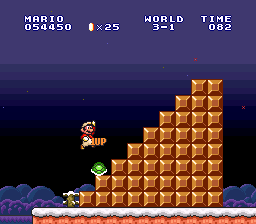
Replication is great because it eliminates a great deal of controller lag, or latency. For laymen, latency is the time between you pressing the button and Mario starting his jump,
For this explanation, I’m going to ask you to picture your gaming machine in terms of layers. When you emulate, you have your hardware layer (processor, RAM, and so on). Then, you have your operating system layer (usually Windows, or a flavor of Linux). Then, running on top of your operating system that is your emulation program, yet another layer. The signals that come from your controller have to make their way through two extra layers of coding to get to your game. It may only be a handful of milliseconds, but sometimes that’s the difference between Mario hitting a Koopa Troopa or being hit by the Koopa Troopa.
MiSTer is different. It’s based on Field Programmable Gate Array (FPGA) technology. Oversimplified (again), a good programmer can write a core which tells the FPGA chip how to replicate the original console’s processor, RAM, and Graphics Processing Unit. The game ROM itself runs right on top of the FPGA chip just as a gaming cartridge would directly interact with an original console. Your controller’s signals don’t need to go through an emulator program and an operating system, thereby eliminating much of the latency that exists with emulation.
So, to put it simpler, emulation requires a couple layers of software to act as middlemen between the game and the hardware. Replication allows the game files to communicate directly with the hardware.
The MiSTer Project
The MiSTer Project (and, yes, you should type it that way as it has a specific meaning) revolves around one FPGA-based single-board computer that draws very little power and is about the size of a credit card. The DE-10 Nano made by a firm called Terasic.
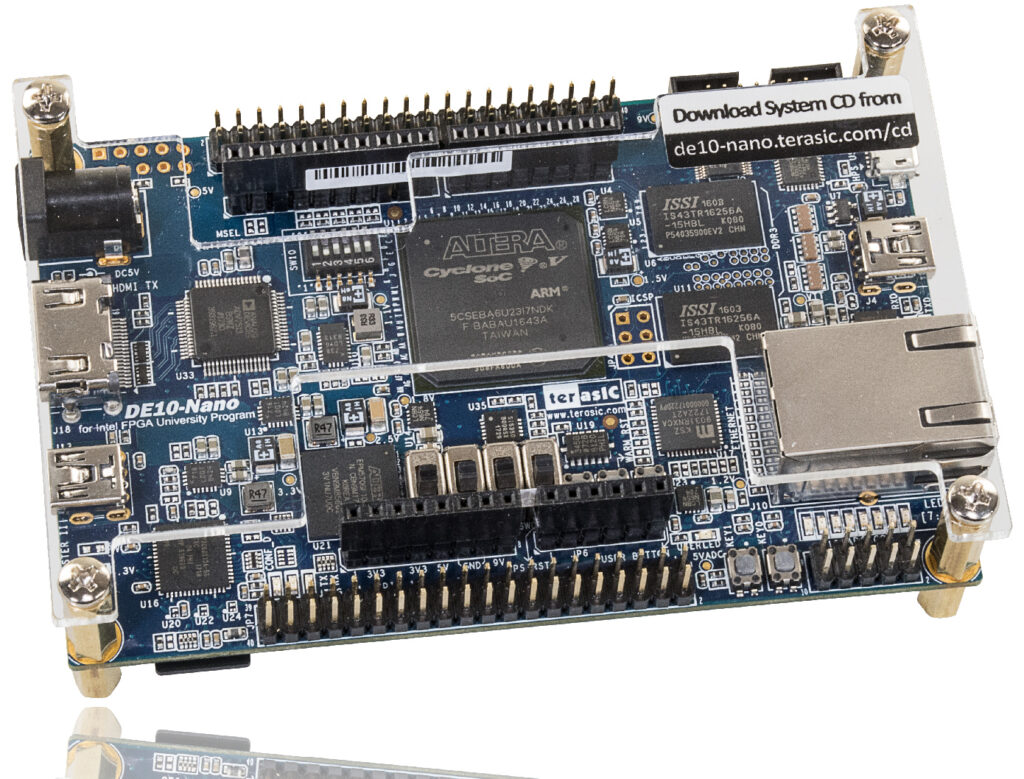
In the last five years or so, a small but thriving community has grown around the MiSTer Project (which is open-source. For laymen, that means the code is open and anyone can inspect it or add to it). Coders who write the cores, web hosters which host the updates, people who have fabricated cases and other useful accessories, bloggers and YouTubers who review the MiSTer and offer advice, the forum administrators and members who offer one another technical support, and wise-cracking university students who use it as a topic for their Expert Blog Entry in their English 306T class all combine to make this a cooperative community that allows us to enjoy retro gaming more accurately and economically than ever before.
You may be asking “Hey, Bret! What can the MiSTer replicate?” Well, after five years of growth and development the list is very long and somewhat mind-boggling. I’ll link it here. It would be simplest and easiest to say that, with a few exceptions, pretty much any computer technology that existed before 1996 can be replicated with the MiSTer.
Still not sold on MiSTer? Here are some other advantages it has over emulation
- Because of the FPGA technology, the tech is nearly indistinguishable from the console it’s replicating. And, when there are differences, it’s mostly because the coders of the core added in some really cool features the original console didn’t have, such as multiple ways to manipulate the look of the video or save states (damn, I love save states!), just to name a couple.
- The MiSTer project has a dedicated coder community which is consistently looking to add cores and improve the existing ones. Additionally, the updates are incredibly simple to implement for the end-user. In the MiSTer menu, you just go to scripts then update_all. Sit back, relax, and watch the magic of the updating process.
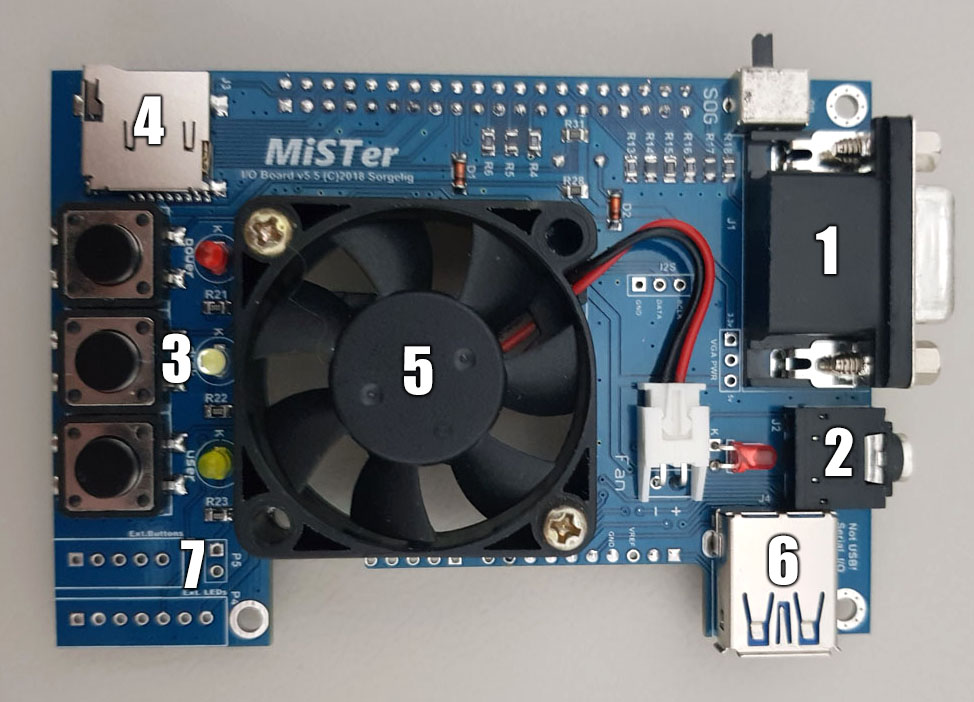
- One of the add-ons for the MiSTer is an analog video out board, which allows the MiSTer to connect to CRT monitor (the big ones with the glass screens). For those who want the ultimate authentic 70’s, 80’s, or 90’s experience, this is a great option to utilize.
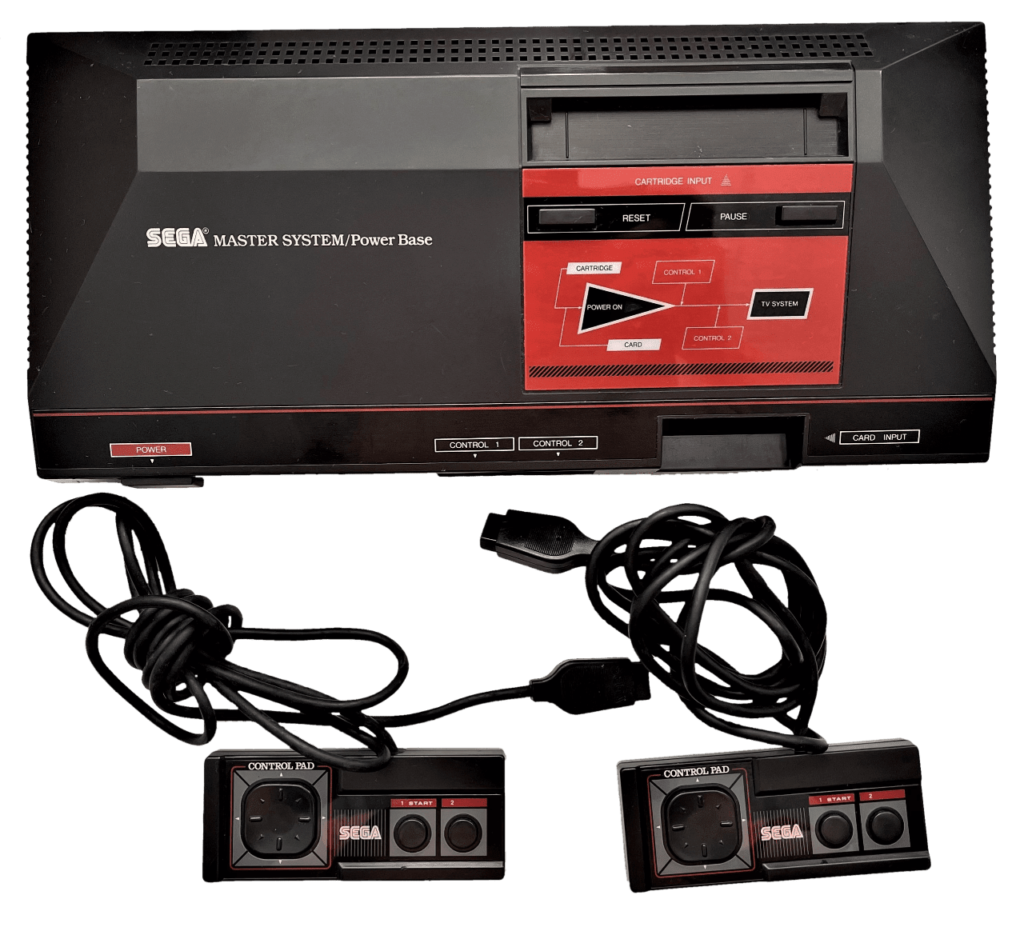
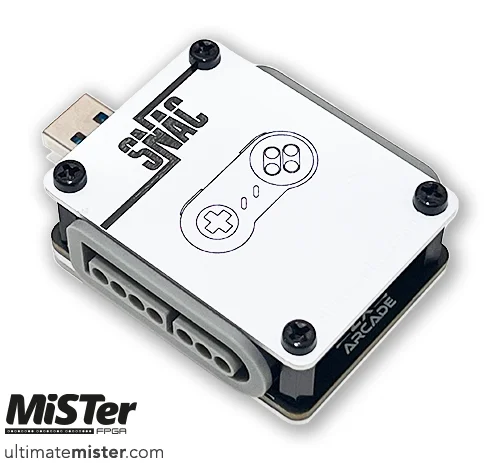
- Speaking of authentic, you can connect your original console controllers to the MiSTer. I’m not talking about a recreation that connects via USB (though those work, also. Check out 8bitdo’s line of products for a great selection, some of which I own myself). I mean the actually controllers that came with your console can be connected. It works by connecting through something called a SNAC adapter, which looks like an HDMI cable on one end and the original console port on the other.
- One of my personal favorite advantages of the MiSTer is that one of its cores replicates a 486 PC computer. All those old DOS games from the 80’s and 90’s can come alive again. In my opinion, the MiSTer 486 core is, by far, the absolute best way to play any DOS game that doesn’t involve having a 25-plus year old computer taking up space in your house.
Disadvantages MiSTer has when compared to emulation
I love my MiSTer and play it nearly daily. However, I do have to admit that it does have some disadvantages when compared to emulation.
- First disadvantage I’ll discuss is the biggest one: Not everything you may want to play is available.
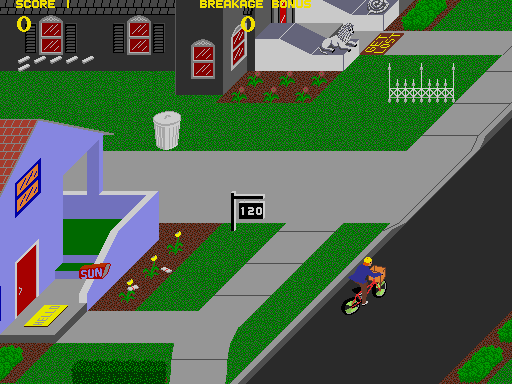
Example: My all-time favorite video game ever is the arcade version of Paperboy. That game runs on a motherboard called the Atari System 2. There is no MiSTer core for the Atari System 2. There are also no cores that can run any arcade version of Mortal Kombat, one of the biggest hits from the 90’s (if not all-time). Aside from a handful of Patreon donations, which I can’t imagine can provide a good living, these cores are passion projects for the MiSTer programmers. Since their time is limited and largely donated, they only work on what they want to work on, when they have time to work on it.
Another reason for this disadvantage is a lack of donated hardware. For a system to be accurately replicated on FPGA, the original chips need to be examined under a microscope. This examination process physically damages the original board beyond repair. Since some arcade motherboards are quite rare and valuable, naturally most of their owners don’t want to give them up. I can understand that. If I had an original Paperboy arcade cabinet I wouldn’t give it up, either. - The DE-10 Nano board, the heart of the MiSTer project, can only go so far technologically. Pretty much any gaming system or computer made after about 1996 isn’t going to be able to be replicated on the DE-10 Nano. Unlike the Raspberry Pi, Orange Pi, Odroid, and other single-board computers, the DE-10 doesn’t get generational updates roughly every three years. You get what you get.
There are other boards with bigger FPGA chips out there, and some experimentation is being done with them. However, they’re pretty far from being ready for prime time, and the proposed price tags will probably keep most gamers (including myself) away. - Less options for replication. Replication has one option, the MiSTer project, which runs on one board: the Terasic DE-10 Nano. If you emulate, you can use software packages like RetroPie, Batocera, Recalbox, RetroArch, emulators that run on Windows, and a few other options. Emulation also gives you choices of hardware: Raspberry Pi, Orangi Pi, Odroid, PC, modified game consoles, and a wide variety of other choices.
- Due to technical limitations of the DE-10 Nano, menus in the MiSTer cannot display box art. This isn’t an issue for me personally, but it may be a disappointment to some.
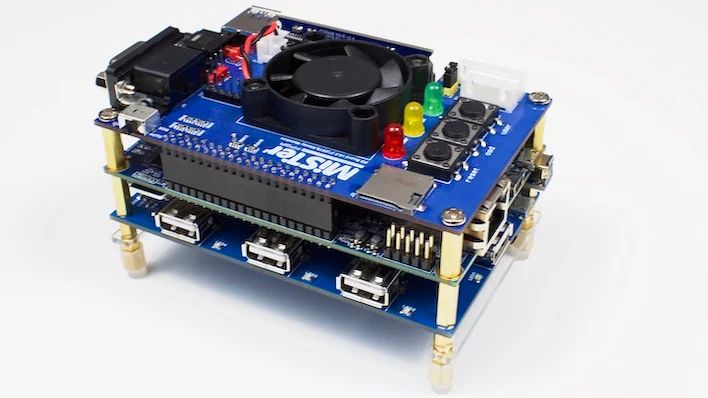
- The MiSTer is a stack once you get a couple of additions and tie them all together. Aesthetically, it can look pretty strange. There are cases out there, but they only do so much to make the MiSTer look “normal.” Though the MiSTer does an outstanding job running thousands upon thousands of games, it’s…well, ugly. When you start getting cables involved, it gets even uglier. I would hope this doesn’t stand between you and exploring replication, but it may turn some people off.
So why do I prefer MiSTer?
Stability? Absolutely. But, that’s not the biggest reason.
Near-perfect graphics and sound? Of course. But, that’s not the biggest reason.
Not being able to tell these games aren’t running on their original consoles except for my knowledge of the MiSTer sitting under my TV? You bet! But, that’s not the biggest reason.
The additional features programmed into the cores that I wish the original consoles had? I’m salivating at the very thought of this. But, that’s not the biggest reason.
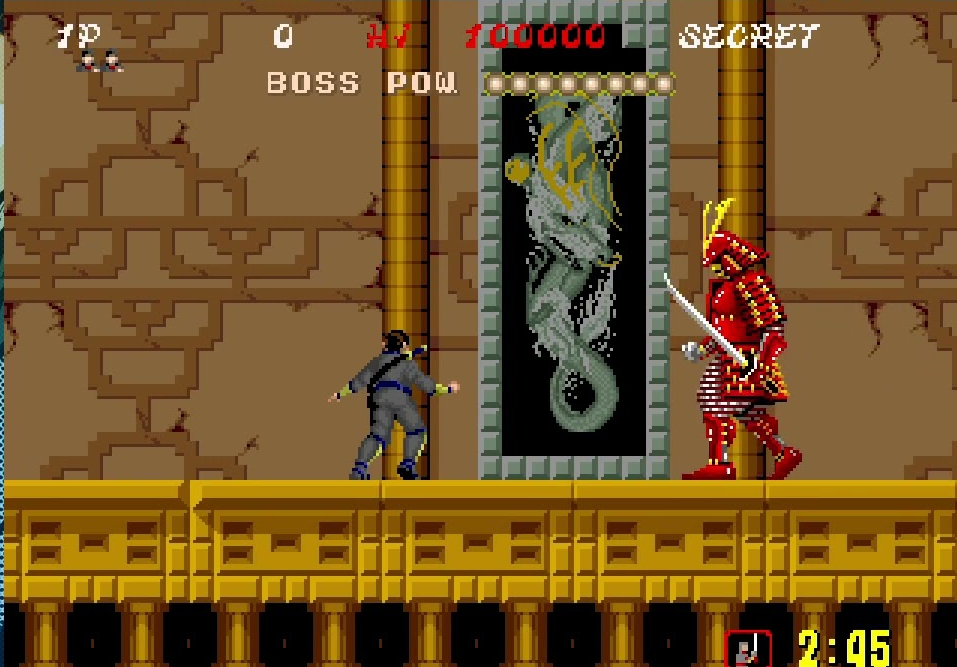
The biggest reason is that when I learned about the MiSTer, I was somewhere in my mid-to-late forties. I had noticed that games I was always good at (such as Shinobi, probably my all-time best game) I was no longer playing as well. My scores had dropped, I wasn’t going as deep into the games. Bosses that I at one time I was sure to beat I wasn’t even making it to. I had assumed that father time was starting to get the best of me, and that my reaction times were slowing down a bit. That may have been partially true. But, it turned out it wasn’t all me. Once I got the MiSTer set up and rolling, playing some of my old favorites, I immediately noticed my performance and my scores returning nearly to what was normal for me historically. The near-absence if controller latency is the biggest reason I love MiSTer. I no longer must settle for a less than authentic gaming experience.
You shouldn’t be settling, either. If you’re a retro gamer and don’t have a MiSTer yet…get one!